
When choosing replacement jaw plates, many buyers focus first on the steel grade. Mn13Cr2 and Mn18Cr2 are widely used manganese steel options, but steel grade is only one factor affecting jaw plate performance.
Tooth profile, feed material, feed size and crushing conditions also matter.
A jaw plate with the right material but an unsuitable profile may still experience excessive wear or poor material grip.
Jaw plates crush material by compression between the fixed and movable jaw plates. Before the material can be effectively crushed, it must be captured and held between the crushing surfaces.
Tooth height, spacing and profile influence how material enters and moves through the crushing chamber.
A suitable profile can improve material grip and reduce unnecessary sliding. Different profiles are therefore used for different crushing applications.
For this reason, selecting a jaw plate should not be based on steel grade alone. The tooth profile should also match the crusher and the material being processed.
Granite, basalt, limestone, river gravel and other materials do not behave in exactly the same way inside a jaw crusher.
Hard and abrasive rock can place high demands on the wear surface, while rounded, wet or high-fines feed may require different crushing surface characteristics.
This is why jaw plate selection should consider the material being crushed, not simply the manganese grade.
The right profile helps the jaw plates work more effectively with the feed material and can contribute to more consistent wear.
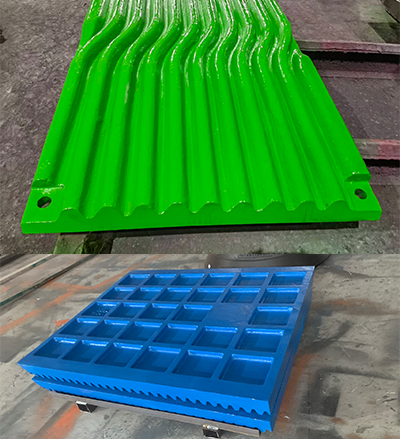
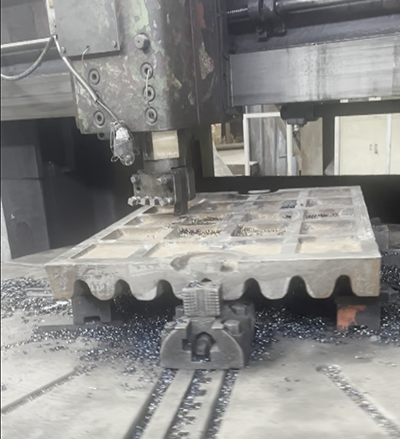
At HaiKuang Heavy Industry, we manufacture jaw plates in Mn13Cr2 and Mn18Cr2.
Mn13Cr2 provides a combination of toughness and wear resistance for many general crushing applications.
Mn18Cr2 is another high-manganese steel option for applications where higher wear resistance may be required.
However, choosing Mn18Cr2 does not automatically solve every wear problem.
Manganese steel relies on work hardening during operation, and actual performance depends on impact conditions, abrasive characteristics and the overall crushing environment.
Therefore, steel grade should be considered together with the tooth profile, feed material and operating conditions.
Before ordering a replacement jaw plate, consider the following factors:
For customized replacement parts, photos, drawings, dimensions or the original worn jaw plate can also help confirm the correct design and specifications.
For customers who are unsure about the correct replacement profile, providing the crusher model, original part information, drawings, measurements or clear photos can help us confirm the required jaw plate specifications before production.
Jaw plate performance is not determined by steel grade alone.
Tooth profile + steel grade + crushing conditions should be considered together.
At HaiKuang Heavy Industry, we manufacture replacement jaw plates in Mn13Cr2 and Mn18Cr2 according to the crusher model, drawings or original samples.
The right jaw plate is not simply the one with the highest manganese content.
It is the one correctly matched to the crushing application.